
Common Themes: Emigration and Ordinary People
Samuel and Eliza (nee Magilton) Adams, my 2x great grandparents on my mothers side, left Plymouth in England for New Zealand as assisted immigrants on the Stad Haarlam, a steamship under charter to the New Zealand Company, on 15 February 1879. They were from County Down in what is now Northern Ireland and recently married. They left a supportive social network of family and friends behind and were facing impending parenthood.
Eliza was close to the end of her first trimester of pregnancy when they disembarked in Wellington on 18 April, 1879. Their daughter was born in the October, poignantly named after a witness at their wedding, and then lost less than two months later in December. There are many questions to ask, particularly of Eliza, about this period in their life.
Regrettably, the voices of those we find ourselves interested in, and wishing we could go back in time to talk to, are often lost. However, frequent fears and experiences can be identified in a variety of sources exploring what was often a destabilising nineteenth century emigrant experience.
David Hastings, author of a book on the migrant journey in the late nineteenth century, describes the period between the leaving and the getting there as
‘the in-between’ with ‘ a cloud of witnesses to tell us what it was like’.[1]
Perceptions differed according to where people landed, their social class, the amount of capital they had to bring with them, who was there before that they knew, when they left, if they were on their own or with family, and the particular set of circumstances that encouraged emigration.
Liam Callanan, a novelist, teacher and journalist, wrote that “We all carry, inside us, people who came before us.” Our ancestors brought with them hopes, dreams, fears, beliefs, values, cultural practices and languages which have had a marked impact on the places they occupied. Perhaps attempting to understand these helps us to better understand ourselves.
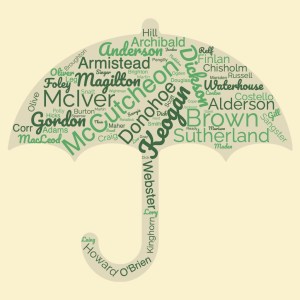
In this blog I aim to try to capture some of the lived experiences of my ancestors and my husband’s ancestors. Many of them are invariably immigrants, some through choice and some, on my side of the family in particular, by force. It takes time to thoroughly investigate family stories and to this end I am working to gain as much primary evidence as possible so as to bring them to life warts and all. Somehow this makes them all real and perhaps more relatable.
[1] Hastings, David, 2012. Over the Mountains of the Sea: Life on the Migrant Ships, 1870-1885. Auckland: Auckland University Press

 Tales2Tell
Can’t wait to learn more .
LikeLike
Thanks Sadie!
LikeLike