
“I am prepared to go anywhere, provided it be forward” (David Livingston)
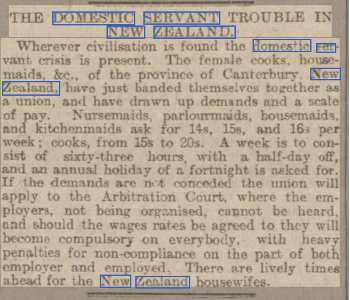
A Census of the British Empire in 1906 recorded Great Britain as ruling one fifth of the world. Domestic workers in New Zealand were calling for a 63-hour working week with a half day off and a fortnight off every year. Mount Vesuvius erupted devastating Naples and the San Francisco earthquake and fire killed close to 4000 residents.
On 29 November 1905, my great grandmother Annie Webster left London for New Zealand on the steamship Turakina, a journey of some 24,000 km. The ship was fairly new, built in Dumbarton by William Denny and Brothers for the New Zealand Shipping Company. It had refrigerated cargo space to cater for the import/export market between Britain and its colonies. It could accommodate around 360 passengers, including accommodation for first- and second-class customers. The Turakina had completed its maiden voyage in late 1902 but had a short life – it was torpedoed and sunk less than fifteen years later on 13 August 1917 whilst carrying troops to New Zealand via New York with the loss of four lives.
Annie was one of 168 third class passengers, and contracted to disembark in Wellington, New Zealand. She was on the same ticket as Miss M Wilson, both of whom are recorded as Scottish and domestics. It is not known all the reasons she chose to leave Scotland but a new start seems to be a likely reason. After 70 days at sea, Annie arrived in Wellington at 3.40 am on 16 January 1906 as one of 219 passengers and 5653 tons of cargo (Otago Daily Times, 17 Jan 1906) including livestock imported for individuals; pedigree sheep, fowls, bantams, pigeons and canaries (Marlborough Express 1906, Wanganui Herald, 1906).

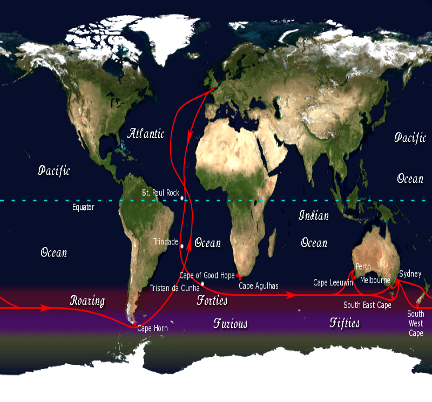
Although the Suez and Panama Canals had opened in 1869 and 1914 respectively, the New Zealand Shipping Company that Annie sailed with continued using the traditional route to Australia and New Zealand until at least later in 1914, with coal stops in Tenerife, Cape Town and Hobart.
The Turakina reported ‘moderate seas and winds to latitude 22 degrees south’, and ‘strong head winds and high seas’ to Cape Town which the ship reached on 22 December. She sailed again on the afternoon of 23 December, experiencing ‘moderate winds and seas’ in the Southern Ocean, before arriving in Hobart, Australia on 11 January. Twenty-three passengers disembarked in Hobart, along with the unloading of 361 tons of cargo and the ship left that same afternoon for Wellington (Lyttelton Times, 1906).
There was little time for sightseeing at designated stops. The Turakina arrived and departed from a fuel stop in Tenerife on 7 December. Such a stop was described by John Lynn in the diary he wrote in 1911 on his journey to Australia (Notes on Voyage, 1911: High jinks on the high seas. Edited by David Ransom 2021 and available on Amazon.com). Lynn noted that as they were due to arrive at Las Palmas, orders were given that money and valuables be put in the safe of the Chief Steward as locals would be coming on deck to sell their wares/fruit. He described the scenery of ‘gaily painted buildings of red, white, blue, and green at the foot of red sandstone hills’, fishermen, and boats full of locals coming to sell fruit, slippers, shawls, tobacco, wine, spirits, and chocolate. 300 tons of coal were loaded onto the ship in bags. On enquiring what wage per day [the coal loaders] received for ‘that dirty, hard work’ he was appalled to hear it was 1/- per day. In response he said he ‘is not surprised they do not want missionaries if the Englishman pays so little’, as it is a poor example of ‘Christian England’. It is likely that Annie experienced similar sights and sounds.

It is worth noting further experiences Lynn reported on as they are repeated in many a migrant’s diary of their journey over several decades. Recurring themes were the misery of seasickness on entering the Bay of Biscay. Rough seas resulting in general chaos were mentioned several times with personal items being thrown about in rooms; slipping from one end of the bed to another while trying to sleep; and dining in rough weather with meals ending up on the floor. On Lynn’s particular trip, he, at one point, reported ‘high seas with crests of up to 60 yards rounding the Cape…the vessel was below the level of the sea with waves breaking over them…noise like thunder, and rolling up and down and side to side’.
Continue reading “Passenger Arrivals 1906 – Annie Webster”
 Tales2Tell